
Mehndi Designs Guide: Arabic & Simple Styles Explained
Arabic mehndi uses bold, flowing floral and vine patterns with generous open space between motifs, while simple mehndi favours fine, minimal linework and small repeated shapes — the right choice usually comes down to how much time you have and how much detail you want on your hands. Here's how to tell them apart and pick the one that fits your event.
[IMAGE PLACEHOLDER: side-by-side comparison photo, Arabic mehndi hand vs simple mehndi hand]
What Makes Arabic Mehndi Different
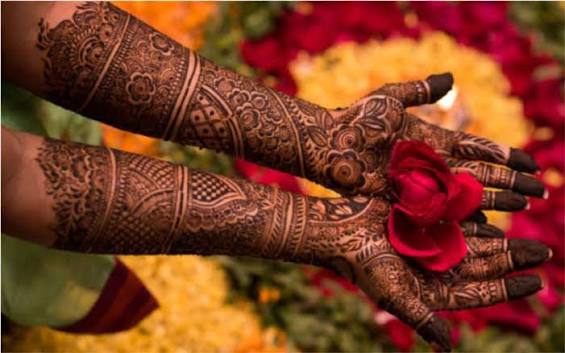
Arabic mehndi is built around large floral and vine motifs, thick bold strokes, and — crucially — a lot of bare skin left visible between elements. Where Indian traditional designs often fill the entire hand with intricate detail, Arabic style deliberately leaves negative space, which makes the pattern look striking from a distance and also means it applies faster than a fully filled design.
Typical motifs: Large flowers, curling vines, leaf clusters, occasional peacock or paisley accents.
Coverage: Usually the back of the hand and fingers, rarely the full palm.
Application time: Generally quicker than a dense traditional design, since there's less area to fill.
[IMAGE PLACEHOLDER: close-up of a bold Arabic floral motif on the back of the hand]
What Makes Simple Mehndi Different
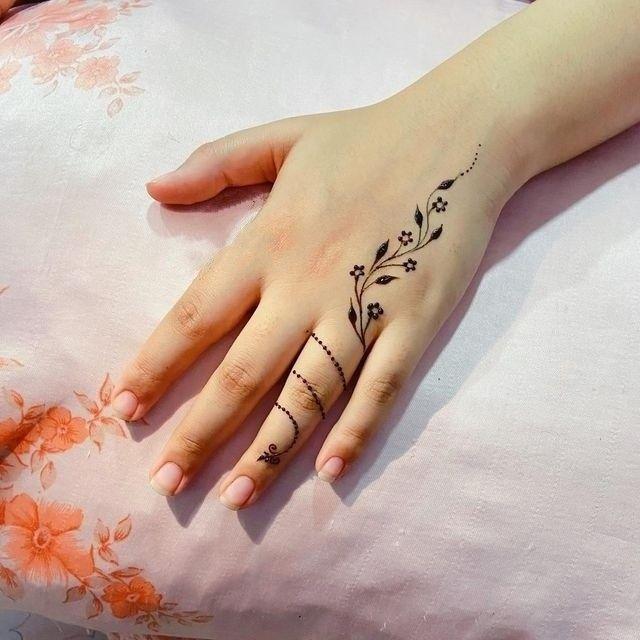
"Simple" mehndi isn't a single fixed style — it's more a design philosophy: fewer elements, cleaner lines, and patterns that don't demand hours of sitting still. It can borrow from Arabic, traditional Indian, or minimalist geometric styles, as long as the execution stays light and quick.
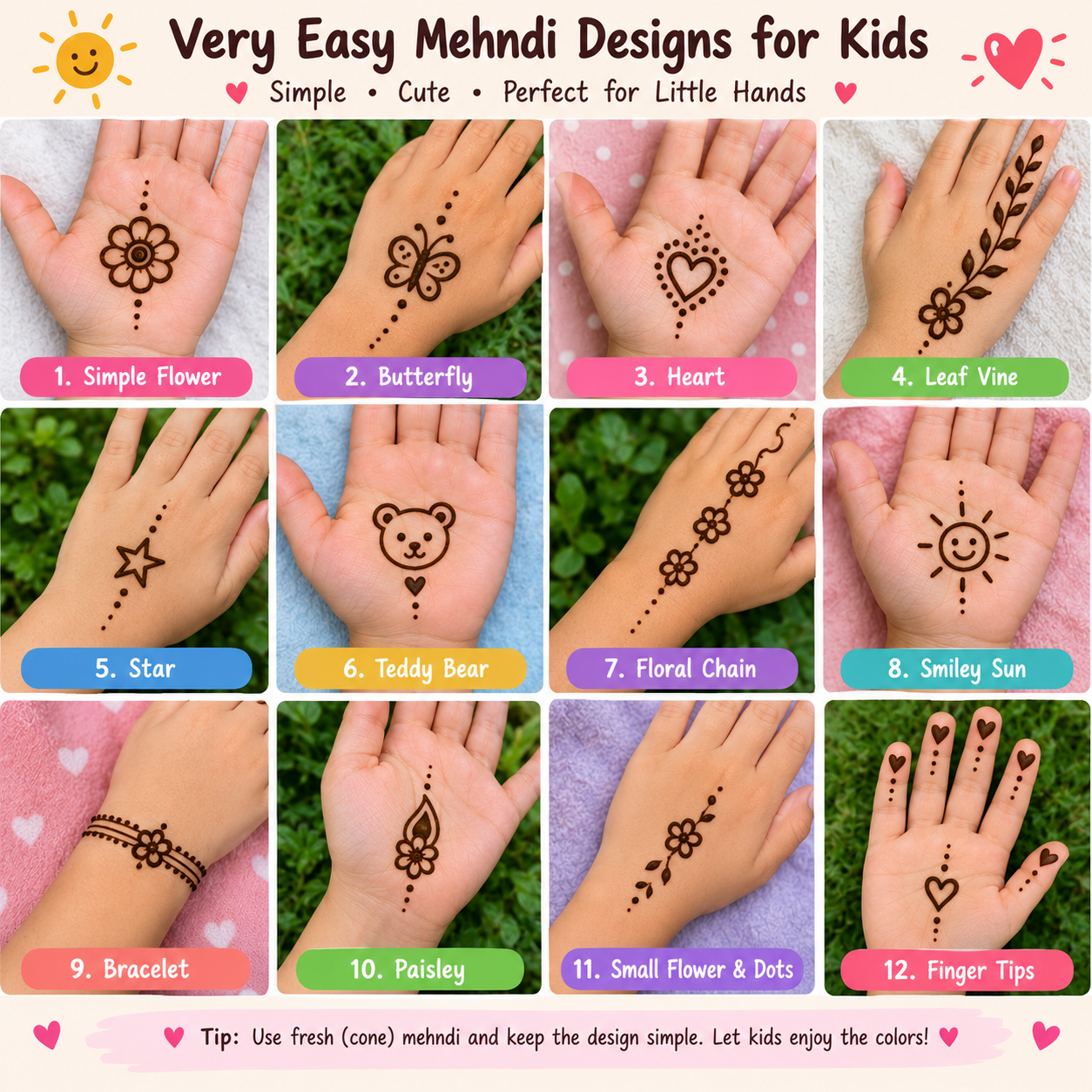
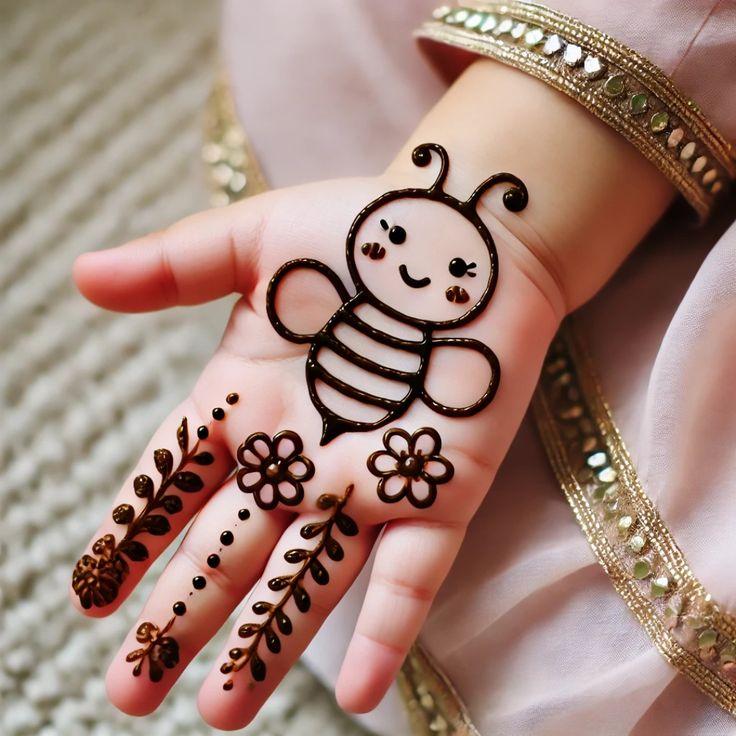
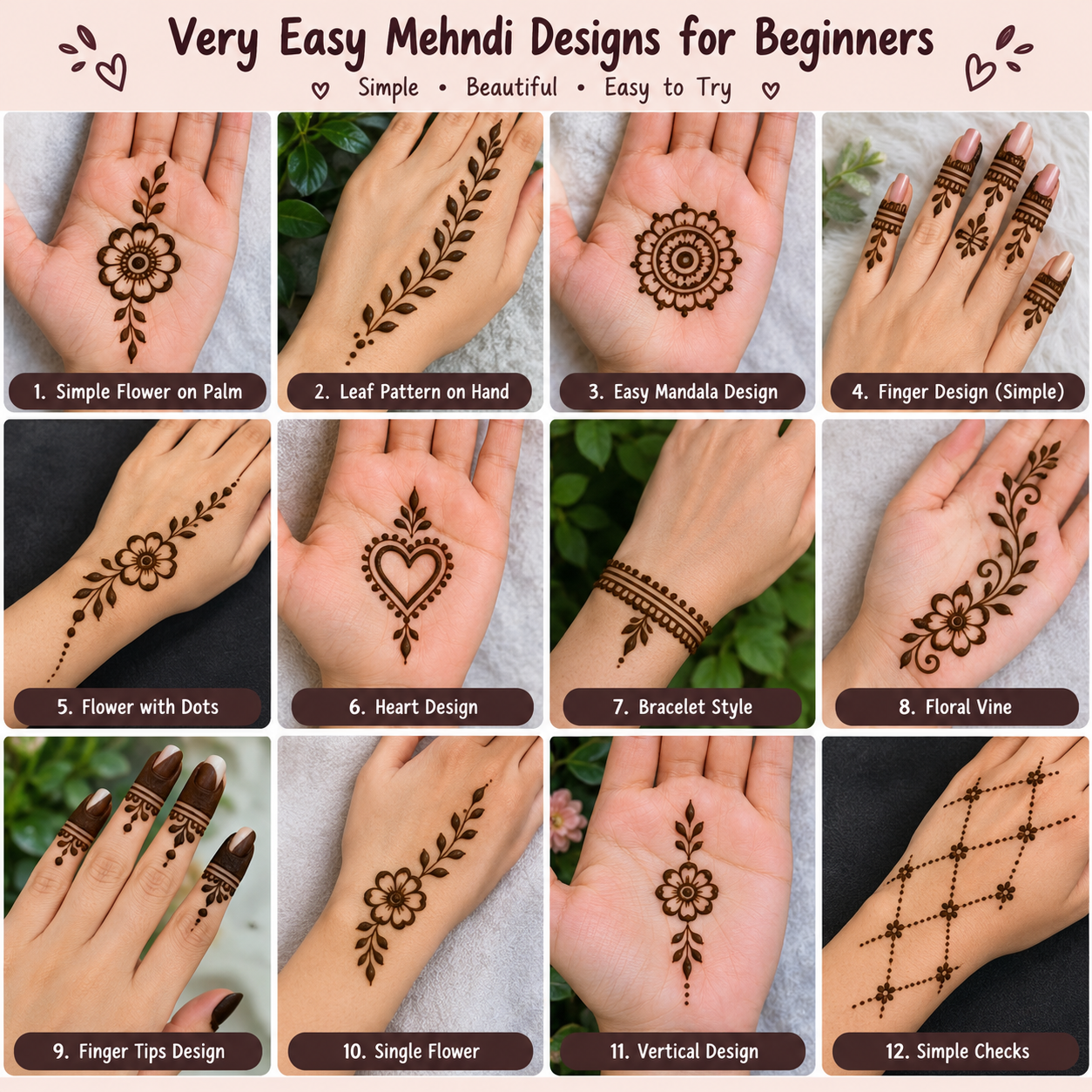
Typical motifs: Small florals, dot borders, thin vine trails, simple mandalas on the palm centre.
Coverage: Often just fingers and a small portion of the palm or back of hand, rather than the full hand.
Application time: Among the fastest mehndi styles to apply, making it popular for guests and everyday festive wear.
[IMAGE PLACEHOLDER: simple, minimal mehndi design example on fingers only]
Choosing Between the Two
If you want a striking, photo-ready look without sitting for hours, Arabic style generally delivers the most visual impact for the least application time, thanks to its bold, open patterns. If you want something understated that won't dominate your outfit or jewellery, simple mehndi is the safer, quicker choice. Brides often combine both — an Arabic-style base pattern with simpler fill-in details — to balance drama and practicality.
Where on the Hand Each Style Works Best
Arabic patterns photograph best on the back of the hand and fingers, where the bold strokes and negative space read clearly. Simple designs work well almost anywhere, including the palm, since the lighter linework doesn't compete with the skin's natural lines and creases.
Occasions Each Style Suits
Arabic mehndi tends to suit sangeet and reception functions, where a bold look under stage lighting photographs well. Simple mehndi fits daily festive wear, office celebrations, or as a quick option for wedding guests who don't want to commit hours before the function.
How Long Each Style Takes to Apply
Application time depends heavily on the artist's speed and the exact pattern, but as a general rule, more open space and fewer fine details mean less time in the chair. Simple designs are typically the quickest of all mehndi styles; Arabic sits in the middle, faster than a dense traditional full-hand fill but slower than the most minimal simple patterns.
Aftercare Basics
Regardless of style, mehndi colour develops over several hours after application and continues darkening for a day or two. Avoid water contact immediately after application, and keep the paste on as long as comfortably possible — most artists recommend leaving it on overnight for the deepest, longest-lasting colour.
Common Mistakes When Choosing a Style
The most frequent regret people mention after their mehndi is choosing a style based on a single reference photo without considering their own skin tone, hand shape, or the outfit they'll actually be wearing. A bold Arabic pattern that looked stunning on someone else's hand might read differently on yours depending on how the motifs sit against your own finger length and palm shape. Bring two or three reference options to your artist rather than one fixed idea, and ask for their honest opinion on what will translate best — a good artist has seen enough hands to know what genuinely works.
Another common mistake is underestimating application time and scheduling mehndi too close to the actual function. Even a moderately complex Arabic design needs the paste to sit undisturbed for hours to develop proper colour, so squeezing it in the morning of an evening event rarely gives the best result.
How Pricing Typically Works for Each Style
Mehndi artists generally price by hand coverage and design complexity rather than by style name alone, so an elaborate Arabic pattern covering the full hand can cost more than a simple design, and a dense traditional full-hand fill can cost more than either. Bridal packages, which often include both hands and feet plus a trial session, are usually priced separately from single-function designs for guests. Always ask for a clear breakdown of what's included — hands only, hands and feet, one sitting or a trial plus final session — rather than assuming a quoted number covers everything you have in mind.
Regional Variations Worth Knowing
What's called "Arabic" mehndi today has been shaped by Middle Eastern henna traditions, but Indian artists have adapted it considerably, often blending it with regional touches — a Rajasthani-influenced border, or motifs borrowed from traditional Marwari bridal patterns. Similarly, "simple" mehndi looks different depending on the region and artist; some interpret it as minimalist geometric linework, others as a scaled-down version of full traditional coverage. When browsing reference photos, it's worth noting which regional style you're actually drawn to, since the same word can describe fairly different looks.
What Actually Determines How Dark the Colour Comes Out
Neither style is inherently darker or longer-lasting than the other — colour depth depends far more on paste quality, how long it's left on the skin, and individual body chemistry than on whether the pattern is Arabic or simple. Body heat genuinely affects colour development, which is why some people wrap their hands or apply a sugar-lemon mixture to keep the paste moist and warm for longer. This means an Arabic design left on for the same duration as a simple one will generally develop to a similar depth of colour, contrary to the assumption that bolder patterns automatically stain darker.
Find Mehndi Artists on WeddingBuzz
WeddingBuzz features verified mehndi artists experienced in both Arabic and simple styles, with portfolios and reviews to help you find the right match for your event.
Building a Design Around Your Jewellery Plan
If you already know you'll be wearing statement bangles, a maang tikka chain that drapes onto the wrist, or heavy rings, share that plan with your mehndi artist before the pattern is finalised. A dense design that stops abruptly where a bangle sits can look unintentional, while a pattern designed with that jewellery placement in mind — leaving a deliberate gap, or wrapping the motif around where the jewellery will rest — reads as considered rather than accidental in photographs.
Frequently Asked Questions
What's the main difference between Arabic and simple mehndi?
Arabic mehndi uses bold, open floral patterns with lots of visible skin between motifs, while simple mehndi favours fine, minimal linework with less coverage overall.
Which style lasts longer on the skin?
Colour longevity depends more on paste quality and aftercare than the style itself — both fade at a similar rate with proper care.
Which style is better for beginners applying their own mehndi?
Simple mehndi is generally easier to attempt at home, since the patterns involve fewer intricate curves than a full Arabic floral design.
Is Arabic mehndi considered less traditional for Indian weddings?
Not at all — Arabic-style mehndi is widely used across Indian weddings today, often blended with traditional motifs for a hybrid look.
Questions to Ask Before You Book an Artist
Ask to see recent portfolio photos in both styles specifically, since some artists specialise heavily in one and only casually offer the other. Confirm roughly how long your chosen design will take on the day, whether they bring their own cone or expect you to supply anything, and what their policy is if you want a small adjustment mid-session rather than committing to the original plan for the full duration.
Conclusion
Both styles have a real place in a wedding's mehndi lineup — Arabic for visual drama, simple for speed and versatility. Many brides use both across different functions rather than choosing just one.
Explore mehndi artists on WeddingBuzz: Browse Vendors on WeddingBuzz | Call: +91 73100 30003