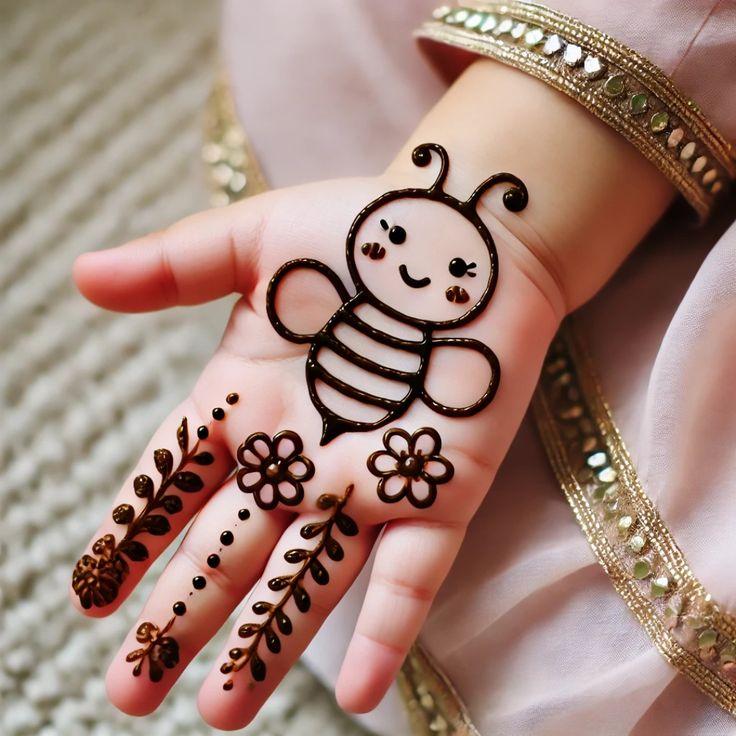

Simple & Easy Kids Mehndi Designs
The best kids mehndi designs are small, quick to apply, and use natural henna rather than dark chemical mixes — dots, tiny flowers and simple borders work far better for children than intricate adult-style patterns that need a long, still sitting time. Here's how to pick and apply mehndi safely and simply for kids.
[IMAGE PLACEHOLDER: child's hand with a small dotted flower mehndi design]
Why Kids Need a Different Approach
Children rarely sit still for the twenty or thirty minutes an intricate adult design demands, and their skin can be more sensitive to certain henna additives. A good kids' design is built around speed and safety first, decoration second — small motifs that an artist can complete in a few minutes, using a paste free of harsh chemical additives.
Popular Motif Categories for Kids
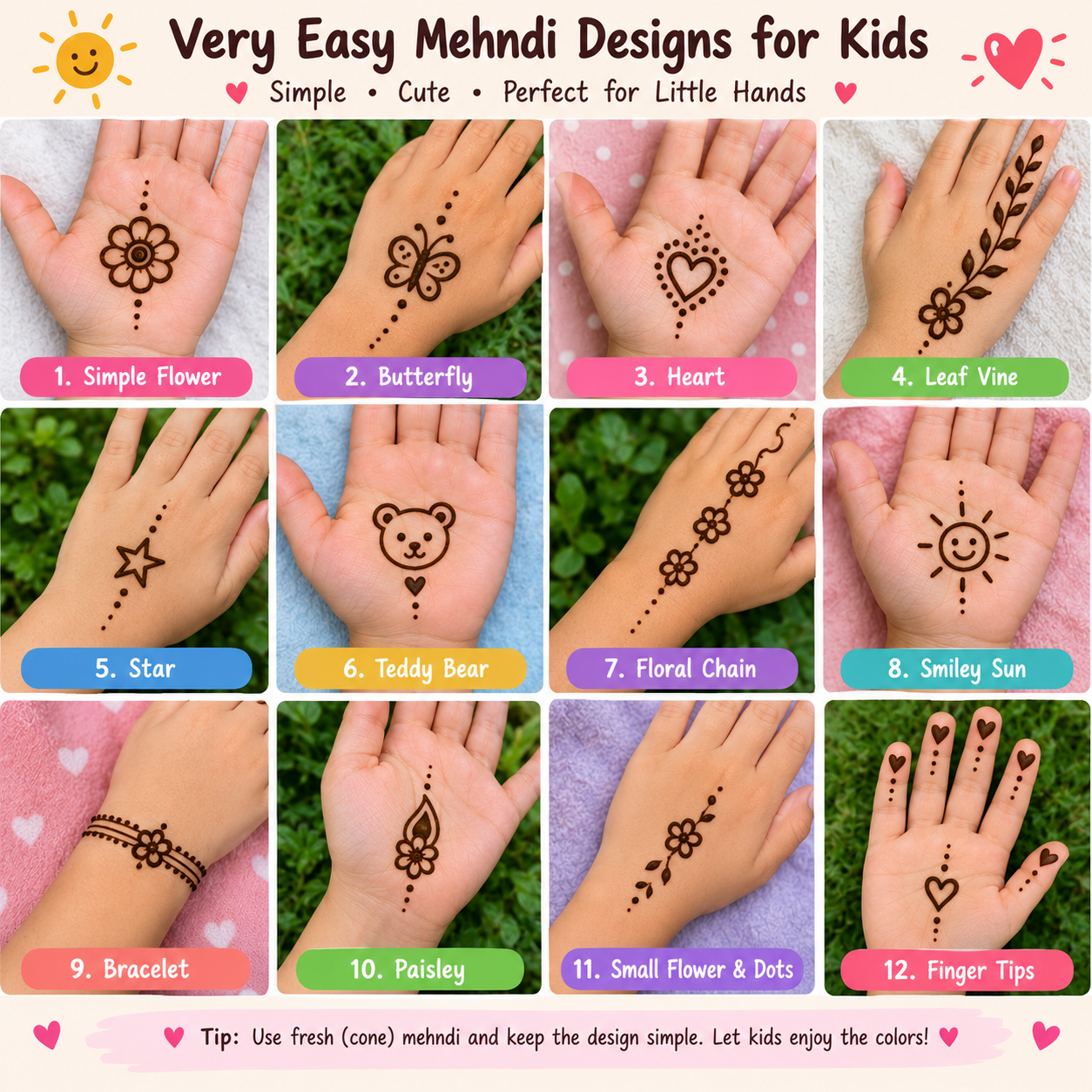
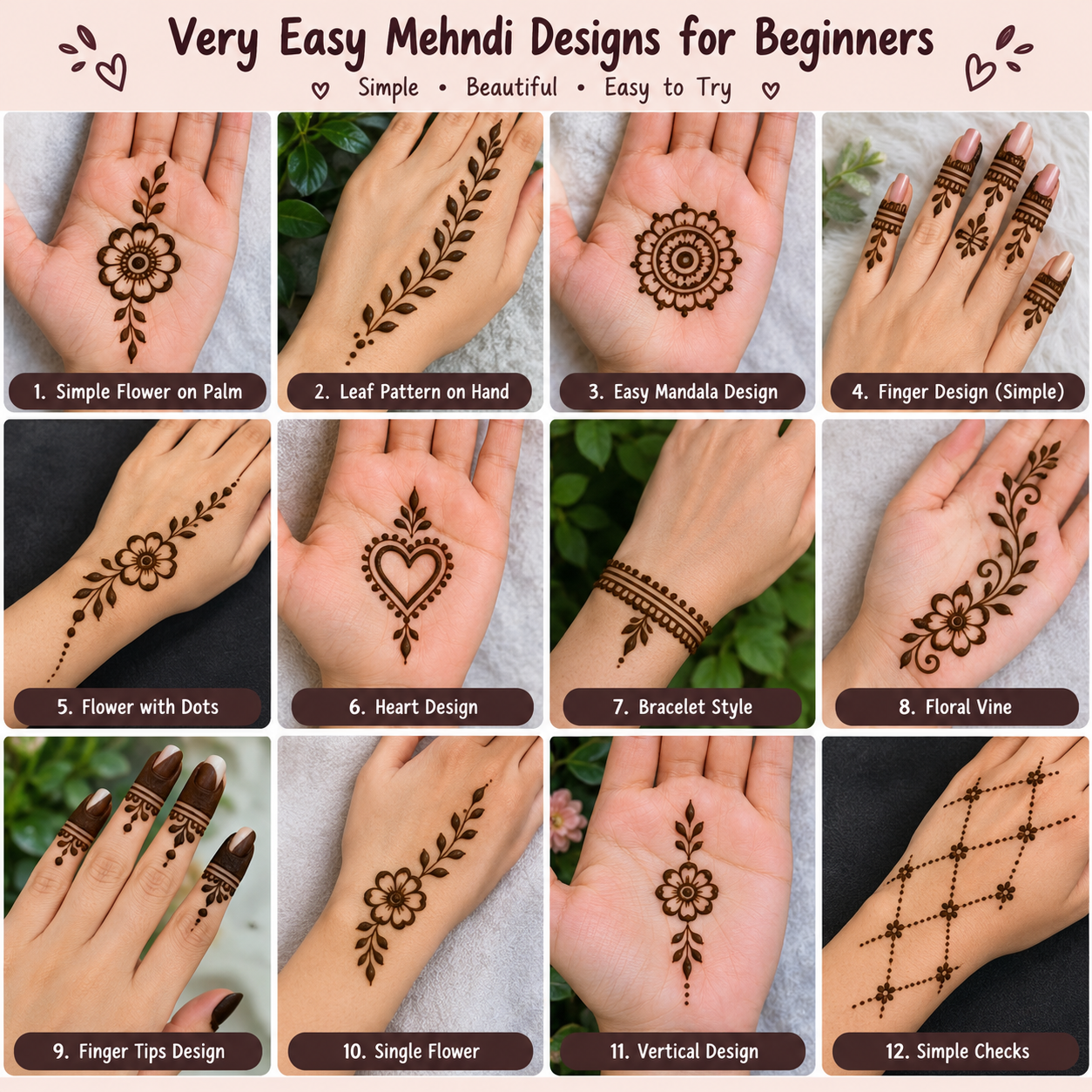
Dot and line patterns: Simple repeated dots along fingers or a small border on the palm — quick and forgiving of small movements.
Small flowers and leaves: A single flower motif on the back of the hand or a fingertip, rather than a full-hand pattern.
Cartoon or playful shapes: Stars, hearts, or simple animal outlines that feel fun rather than formal.
Mini mandalas: A small circular pattern on the palm centre, simplified down to just a few rings.
[IMAGE PLACEHOLDER: a few small motif examples in a grid — dots, mini flower, star shape]
Safety Considerations
Always ask your mehndi artist whether they use natural henna paste, and avoid "black henna" products that sometimes contain additives linked to skin reactions in children. A small patch test on the wrist or forearm a day before the event is a sensible precaution, especially for a child who hasn't had mehndi applied before.
How Long a Kids' Design Should Take
Aim for designs an experienced artist can complete in under ten minutes. Anything longer risks a restless child smudging the wet paste, which both ruins the design and can upset a child who was excited about it.
Getting a Fidgety Child to Sit Still
A short video or a snack held in the other hand can help keep a child occupied during application. Starting with the least dominant hand first, so the child can still use their other hand freely, also reduces frustration during the wait for the paste to dry.
Choosing Where on the Hand to Apply It
The back of the hand generally works better for kids than the palm, since children touch and grip things constantly with their palms, which risks smudging a fresh design far more than the comparatively protected back of the hand. A single motif near the wrist or on one or two fingers also gives a child enough freedom to still use that hand carefully, rather than needing both hands kept still and idle for an extended period.
Occasions This Suits
Kids' mehndi works well for school functions, family weddings, Diwali, Eid, and other festive occasions where a simple, quick design adds to the celebration without requiring the child to sit through a lengthy application.
What to Ask the Mehndi Artist Beforehand
Before the function, ask the artist directly whether they've worked with children before and how they typically adjust their approach — the answer tells you a lot about whether they'll be patient with a wriggling five-year-old or expect the same stillness as an adult client. It's also worth asking how they handle a child who wants to stop halfway through; a good artist can gracefully finish a partial design rather than leaving an unfinished-looking pattern.
Ask, too, whether they carry a specific children's-friendly paste, separate from what they use for adult bridal work, since some artists do maintain a distinct, milder mix for young skin.
Alternatives to Traditional Henna for Sensitive Skin
For children with known sensitivities, some families opt for henna-based temporary tattoo stickers or stencil-guided application, which reduces contact time and lets a parent control exactly what touches the child's skin. These won't achieve the same rich, long-lasting colour as traditional cone-applied henna, but they're a reasonable middle ground for a child who wants to join in the festivities without a lengthy or risky application.
Turning It Into a Fun Pre-Function Activity
Framing the mehndi session as a fun activity rather than something the child has to sit through changes the entire experience. Letting a child choose their own small motif from a few printed options, or pairing the session with a sibling or cousin getting mehndi at the same time, both tend to make children more willing participants rather than reluctant ones. Some families even let children practise with a henna cone on paper beforehand, which builds excitement and familiarity before the real application.
What Parents Often Get Wrong the First Time
A common first-timer mistake is choosing a design that looks simple in a photo but actually requires steady, careful strokes an artist needs real concentration for — which then takes longer than expected and tests a young child's patience anyway. Genuinely quick designs rely on repetition (the same small dot or loop, repeated) rather than a few complex individual elements, since repeated simple strokes are both faster for the artist and more forgiving if the child shifts slightly mid-application.
Parents also sometimes forget to plan for the drying and setting time after application finishes. A child eager to run off and play the moment the artist is done risks smudging wet paste within minutes — building in ten to fifteen minutes of calm, seated time immediately afterward, perhaps with a book or show, protects the final result.
Choosing Motifs That Grow With the Occasion
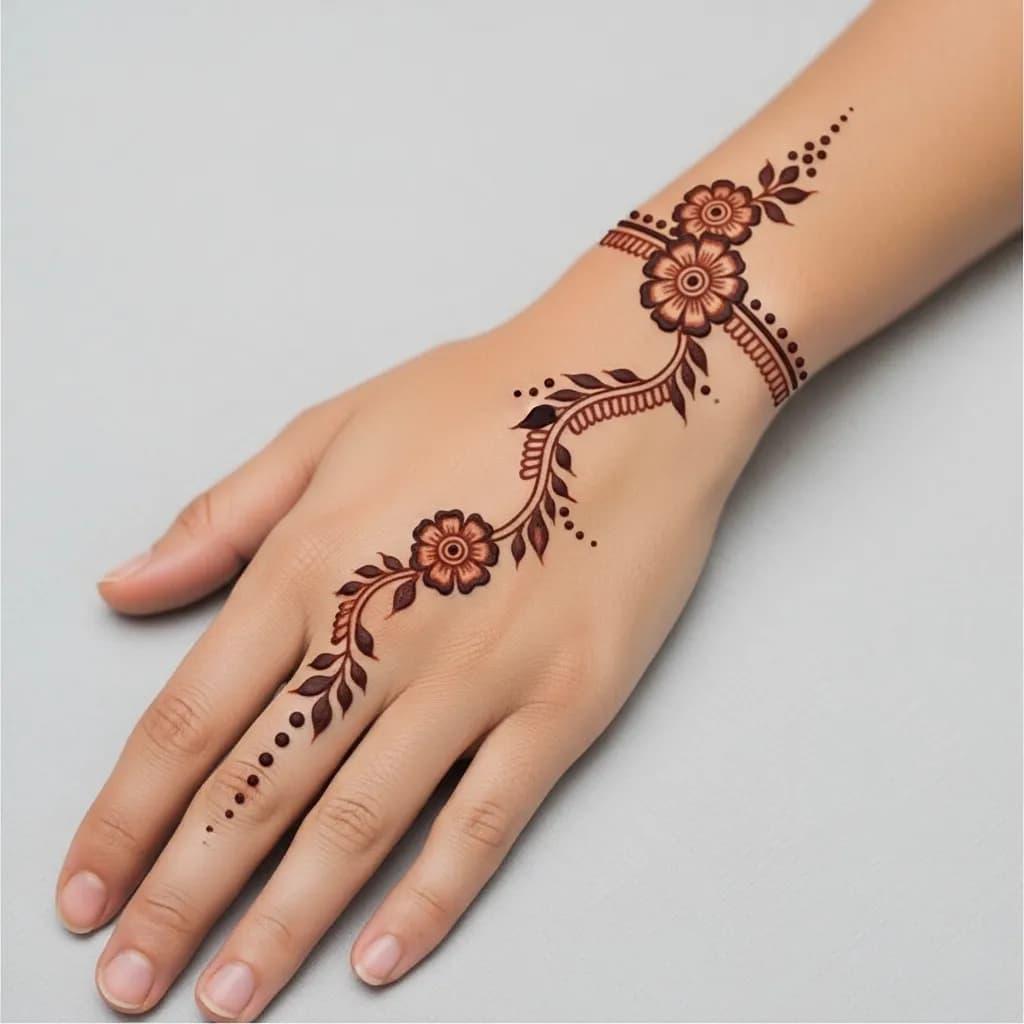
For older children attending their first few weddings, a slightly more grown-up design — a delicate vine along one finger, a small paisley on the back of the hand — can feel like a meaningful step up from the very basic dot patterns used for toddlers, without yet requiring the sitting time of a full adult design. Letting a child's mehndi complexity grow gradually with age, rather than jumping straight from toddler-simple to adult-elaborate, keeps the experience age-appropriate and genuinely enjoyable rather than either frustrating or underwhelming.
Find Mehndi Artists on WeddingBuzz
WeddingBuzz features mehndi artists experienced with kids, who know how to keep designs quick, simple and safe.
Group Mehndi Sessions for Siblings and Cousins
Rather than booking each child individually, many families arrange a shared mehndi corner where cousins and siblings get their designs done alongside each other, sometimes with a small competition for whoever picks the "coolest" motif. This group setting genuinely helps nervous first-timers, since watching an older cousin sit calmly through the process reassures a younger, more hesitant child far more effectively than a parent's reassurance alone. It also gives the mehndi artist a natural rhythm — moving from child to child while paste dries — that keeps the whole session efficient.
Frequently Asked Questions
Is henna safe for children?
Natural henna is generally considered safe for most children, though a patch test is a sensible precaution, especially avoiding "black henna" products with added chemicals.
How long do kids' mehndi designs typically last?
Similar to adult mehndi, colour can last around one to two weeks, though it often fades faster on children due to more frequent hand-washing and play.
What are the best motif types for kids?
Small dots, single flowers, stars and simplified mandalas work best, since they're quick to apply and forgiving of small movements.
How do I keep my child still during application?
A short video, a snack in the free hand, and starting with the non-dominant hand first all help make the process more comfortable for a young child.
When to Say No to a Design a Child Requests
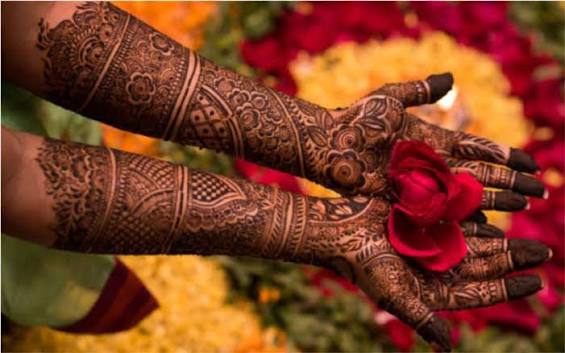
Children sometimes point at an elaborate adult bridal design and ask for the same thing, and it's worth gently redirecting rather than attempting it. Beyond the practical issue of sitting time, very fine, dense linework applied to smaller hands can smudge together more easily than it would on an adult's larger hand, often disappointing a child who was expecting the exact photo they pointed to. Offering a simplified version that captures the spirit of what caught their eye — the same flower motif, scaled down and repeated fewer times — usually satisfies the request without the practical drawbacks.
Conclusion
Keep it small, keep it quick, and check the paste is natural — that's really the whole formula for a good kids' mehndi design.
Explore mehndi artists on WeddingBuzz: Browse Vendors on WeddingBuzz | Call: +91 73100 30003