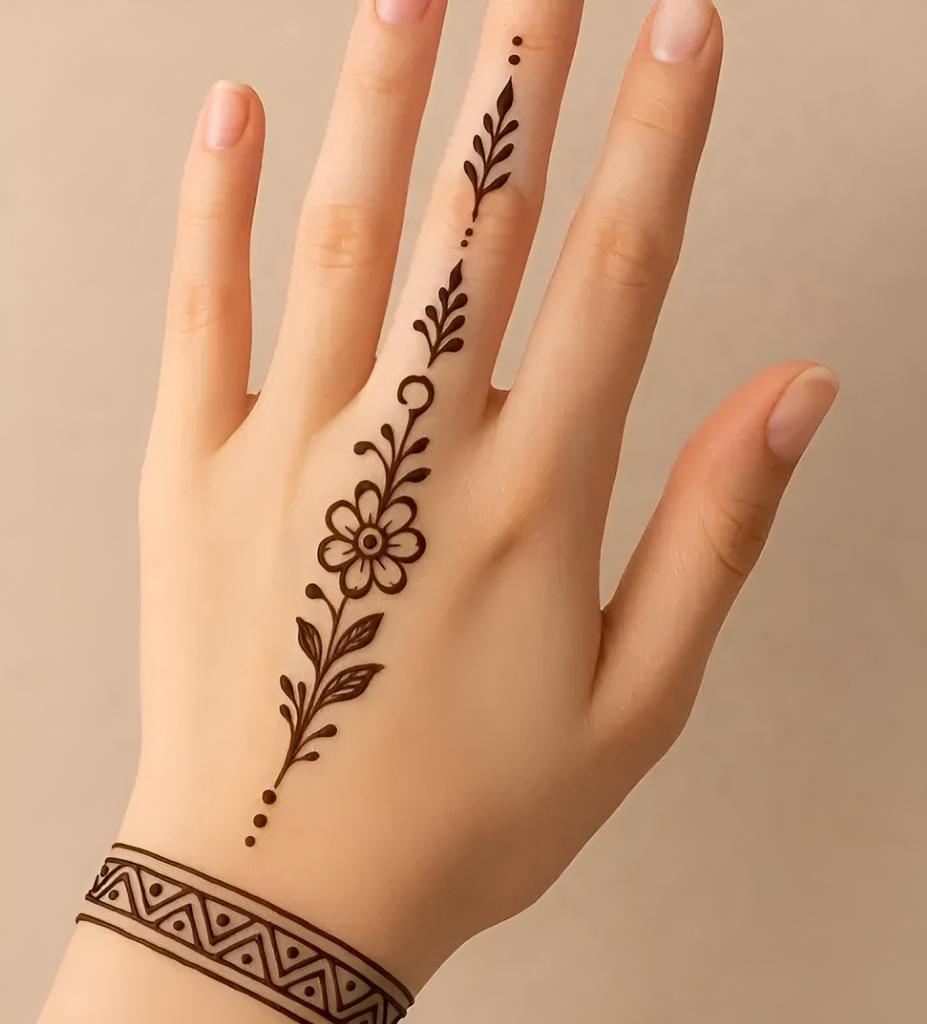

Very Easy Arabic Mehndi Designs
Arabic mehndi is genuinely one of the easier styles for beginners to attempt, precisely because it relies on bold strokes and generous open space rather than the fine, dense linework that traditional full-hand designs demand. Here's how to make the most of that built-in advantage.
[IMAGE PLACEHOLDER: simple bold Arabic floral motif with visible open space around it]
What Keeps Arabic Mehndi Genuinely Easy
Where traditional dense mehndi patterns require steady, fine control over long, connected linework, Arabic style is built around thicker strokes and large motifs with visible bare skin between them. Thicker lines are simply more forgiving of a slightly shaky hand than fine ones, and the open space means a small imperfection in one motif doesn't visually connect to — and disrupt — the rest of the pattern the way it would in a densely filled design.
Core Elements of a Simplified Arabic Pattern
One or two large floral motifs: A single bold flower shape, rather than a cluster of smaller ones.
A curling vine connecting them: A single flowing line linking the motifs, giving the design a sense of direction.
Generous negative space: Deliberately leaving bare skin between elements — this is a feature, not something to fill in.
A few simple leaf shapes: Small teardrop leaves branching off the main vine, quick to draw and forgiving of variation.
[IMAGE PLACEHOLDER: curling vine connecting two floral motifs with leaf details]
Step-by-Step for an Easy Arabic Design
Draw one bold flower shape on the back of the hand. Keep the petals thick and simple — five or six basic petal shapes around a centre dot.
Extend a single curved vine line from the flower toward the wrist. Move slowly and let the line flow naturally rather than forcing a perfectly smooth curve.
Add two or three small leaf shapes along the vine. Simple teardrop shapes, angled slightly outward from the main line.
Add a second, smaller flower near the wrist. This bookends the design and gives it a clear beginning and end.
Resist the urge to fill remaining space. The bare skin between elements is what makes the design read as Arabic style rather than a sparse attempt at a denser pattern.
Choosing the Right Floral Motif for Beginners
A simple five-petal flower with a single centre dot is the most forgiving starting motif — it's recognisable even when slightly uneven, unlike more complex multi-layered flowers where asymmetry is more noticeable. Once this basic flower feels comfortable, you can experiment with slightly more elaborate petal shapes or additional layers.
Why Negative Space Does the Work for You
New mehndi learners often instinctively want to fill every available space, assuming more coverage looks more finished. With Arabic style specifically, the opposite is true — the contrast between bold pattern and bare skin is what creates visual impact. Leaving space isn't a shortcut you're taking; it's the actual design principle that makes this style distinct and, conveniently, also makes it faster and more beginner-friendly.
Common Mistakes With Bold Strokes
Beginners sometimes apply Arabic-style strokes with the same light, careful pressure they'd use for fine traditional linework, which produces thin, hesitant-looking lines rather than the confident, bold strokes the style actually calls for. Practising a firmer, steadier squeeze on paper first — aiming for a noticeably thicker line than you might expect — usually produces a much more authentic Arabic look.
Adapting the Pattern for Different Hand Areas
This same flower-vine-flower structure adapts easily to different areas: shortened onto a single finger, extended along the entire forearm for a bolder statement look, or mirrored on both hands for symmetry. Once you're comfortable with the basic building blocks, resizing and repositioning them for different areas becomes straightforward.
How Arabic-Style Motifs Vary in Practice
Not every Arabic-inspired design looks identical — some lean toward rounder, softer floral shapes, while others favour sharper, more angular petal outlines. As a beginner, it's worth picking one specific reference style and staying consistent with it across your whole design, rather than mixing rounded and angular motifs in the same pattern, which can make an otherwise simple design look visually inconsistent.
Pairing Easy Arabic Designs With Jewellery and Bangles
Because Arabic style already relies on open space, it pairs particularly well with statement bangles or a stacked bracelet look, since the bare skin between motifs gives jewellery room to stand out rather than competing with a dense pattern underneath. If you know you'll be wearing specific jewellery, leave a clear gap in your design at that exact spot rather than placing a motif directly where a bangle or ring will sit.
Find Mehndi Artists on WeddingBuzz
For a bolder, more elaborate Arabic design for an actual event, WeddingBuzz features mehndi artists experienced specifically in Arabic-style bridal and guest patterns.
Using Arabic Style as a Confidence-Building Step
Because Arabic-style bold strokes are so forgiving, many mehndi teachers actually recommend it as an early stepping stone before attempting denser traditional patterns, rather than treating it purely as a stylistic preference. Building confidence here first, then gradually introducing finer detail once bold strokes feel comfortable, tends to be a smoother learning path than jumping straight into intricate work.
Frequently Asked Questions
Is Arabic mehndi actually easier than traditional designs?
For beginners, often yes — the bold strokes and open space are more forgiving of small imperfections than the fine, dense linework traditional designs require.
What's the best starting motif for a beginner?
A simple five-petal flower with a single centre dot is easy to draw consistently and still looks recognisable even with minor asymmetry.
How much bare skin should I leave between elements?
Generally as much as feels visually balanced — Arabic style specifically relies on noticeable open space, so don't feel the need to fill gaps.
How long does an easy Arabic design take to apply?
Considerably less time than a dense traditional design, since fewer, bolder elements cover the same visual area more quickly.
Conclusion
Arabic style rewards confidence over precision — bold strokes, generous spacing, and a simple flower-and-vine structure produce a genuinely striking design that's more forgiving for beginners than it first appears.
Want it done professionally for an event? Browse Vendors on WeddingBuzz | Call: +91 73100 30003