
Back Blouse Designs We Are Totally Crushing On
The back of a bridal blouse often gets more camera time than the front — during the varmala, the phera walkaround, and every candid shot taken as guests greet the couple — which is exactly why back design has become its own distinct styling decision. Here's a look at the styles worth considering.
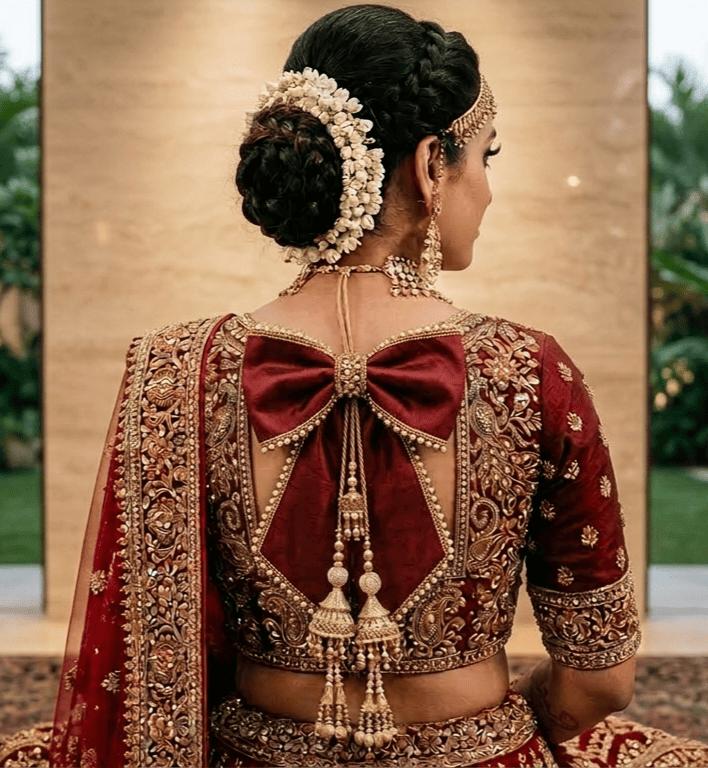
[IMAGE PLACEHOLDER: bride from behind showing a detailed back blouse design]
Why the Back Design Matters So Much
Indian wedding photography spends a surprising amount of time on the bride's back — garland exchanges, walking shots, and candid moments where guests are behind her rather than facing her. A blouse with a plain, unremarkable back can feel like a missed opportunity when the front gets all the design attention.
Popular Back Blouse Styles
Deep U or V back: A classic, elegant cut that works across most saree and lehenga styles.
Keyhole back: A small cut-out shape, often at the nape of the neck, adding detail without full exposure.
Tasseled or tie-back: Decorative strings or tassels closing the blouse, doubling as a design feature.
Mirror-work or embroidered back panel: A fully embellished back panel that becomes the outfit's real showpiece.
Halter or one-shoulder back: A more contemporary cut, popular for reception-style outfits.
[IMAGE PLACEHOLDER: close-up of a mirror-work embroidered blouse back panel]
Choosing by Body Type and Comfort
A deep back design should still feel secure and comfortable through hours of standing, walking and dancing — ask your tailor about internal support (hooks, adjustable straps) so the outfit holds its shape without constant readjustment during long wedding functions.
Choosing by Outfit Style
A heavily embroidered lehenga often looks best with a comparatively simpler back design, so the two elements don't visually compete. A plainer, more minimal front outfit gives you more room to make the back design the statement piece — an embellished panel or a striking tie-back detail.
Considering the Season and Venue
An outdoor summer wedding with a lot of standing and moving around suits a lighter, breathable back design over one weighed down with heavy embellishment, which can feel uncomfortably warm across a long daytime function. A winter indoor reception, by contrast, gives you more room to embrace heavier embroidery or a fully covered back without the same comfort trade-off, since the room itself will typically be climate-controlled.
Matching With Jewellery
If you're planning a statement backless necklace or a jewelled back-drape, choose a back blouse style that leaves enough open space to actually show it off — a fully covered back design competes directly with back-worn jewellery.
Tailoring Tips
Get your back design finalised early — intricate embroidery or mirror work takes real time to execute well.
Do at least one fitting specifically checking mobility (raising arms, sitting) in the finished blouse, not just how it looks standing still.
Bring reference photos to your tailor rather than describing the style verbally, since back-design terminology varies between tailors.
How to Communicate the Design to Your Tailor
Back-design terminology varies enough between tailors that a verbal description alone often leads to a different result than you imagined. Bring clear reference photos from multiple angles, and if possible, a rough sketch marking exactly where you want the cut-out to start and end. For embellished designs, specify the type of work you want — zardozi, mirror work, sequins, thread embroidery — since each has a different cost and timeline, and a tailor left to guess may default to whatever they're most used to producing.
Back Design Considerations for Different Necklines
A high-neck front paired with a dramatically low back creates a deliberate contrast that many bridal stylists favour, since it lets the back design act as the outfit's real statement without competing with front-facing jewellery like a choker. A plunging front neckline, by contrast, often pairs better with a more moderate back design, so the overall look doesn't feel excessively exposed from every angle. Thinking about front and back as a coordinated pair, rather than designing each in isolation, tends to produce a more considered final outfit.
When to Start the Blouse-Making Process
Intricate back designs — heavy embroidery, mirror work, hand-finished tasseling — genuinely need lead time that simpler cuts don't. Start the blouse conversation with your tailor well before your other outfit decisions are finalised, since fabric sourcing for specialised embellishment can itself take time, separate from the actual stitching and fitting process. Leaving this until the final weeks before the wedding is one of the most common sources of last-minute bridal stress.
Layering a Dupatta or Jacket Over a Statement Back
Some brides plan an elaborate back design specifically so it stays hidden through the ceremony under a dupatta or jacket, then gets revealed for the reception once photography shifts to a more relaxed, candid style. This staged reveal approach lets you enjoy the comfort and coverage of a more modest look during the actual rituals, while still having a striking design ready for the evening's photos. If you're planning this, confirm with your photographer when exactly the reveal moment will happen, so it's captured deliberately rather than missed in the shuffle between functions.
Caring for Embellished Back Designs Through the Day
Heavy embroidery, mirror work and sequins all need a bit of care during a long wedding day — sitting against a chair back repeatedly can flatten delicate threadwork or dislodge loose embellishments over several hours. Asking your tailor about a slightly reinforced backing on delicate embroidered areas, and being mindful about how you sit during longer rituals, both help the design survive the day looking as sharp as it did that morning.
Find Bridal Fashion Vendors on WeddingBuzz
WeddingBuzz features bridal fashion vendors who can guide you on blouse design and tailoring for your wedding outfit.
Budgeting Time and Cost for Embellishment Work
Elaborate back designs generally cost more than a plain back, and the gap widens with hand-finished embellishment like zardozi or heavy mirror work compared to machine embroidery. Rather than assuming a single flat tailoring cost, ask specifically what the back-design embellishment adds on top of the base blouse price, so you can decide early whether to invest most of your embellishment budget on the back, the front, or split evenly between both.
Frequently Asked Questions
Why does the back blouse design matter for a wedding outfit?
A large share of wedding photography captures the bride from behind, making the back design just as visible as the front in the final album.
Is a deep back design comfortable for a full day of functions?
It can be, with proper internal support like hooks or adjustable straps — discuss comfort and mobility specifically with your tailor.
Should my blouse back design match my lehenga's embroidery level?
Generally, yes — a heavily embroidered outfit pairs better with a simpler back design, and a plainer outfit gives more room for an elaborate back.
How early should I finalise my back blouse design?
As early as possible — intricate embroidery or mirror work needs real time, so finalise the design well before your final fitting deadline.
A Detail Worth Checking at the Final Fitting
At your last fitting, specifically ask someone to check the back view while you sit, raise your arms, and turn — not just while standing still facing a mirror. Blouses that fit perfectly standing upright sometimes gape or pull unexpectedly once you're seated at a mandap or dancing at a reception, and this is far easier to fix a week before the wedding than to discover on the day itself.
Conclusion
Treat the back of your blouse as its own design decision, not an afterthought to the front — given how much wedding photography happens from behind, it genuinely earns the attention.
Explore bridal fashion vendors on WeddingBuzz: Browse Vendors on WeddingBuzz | Call: +91 73100 30003